COR Small-Employer Kit · 18 documents
The records
your COR audit
looks for.
The inspection, safety meeting, training and maintenance logs auditors want to see, plus the written program behind them: 18 editable Word documents cited to the WorkSafeBC OHS Regulation. BCCSA recommends 12 months of supporting evidence, so the logs are the part to start early. For BC employers with fewer than 20 workers.
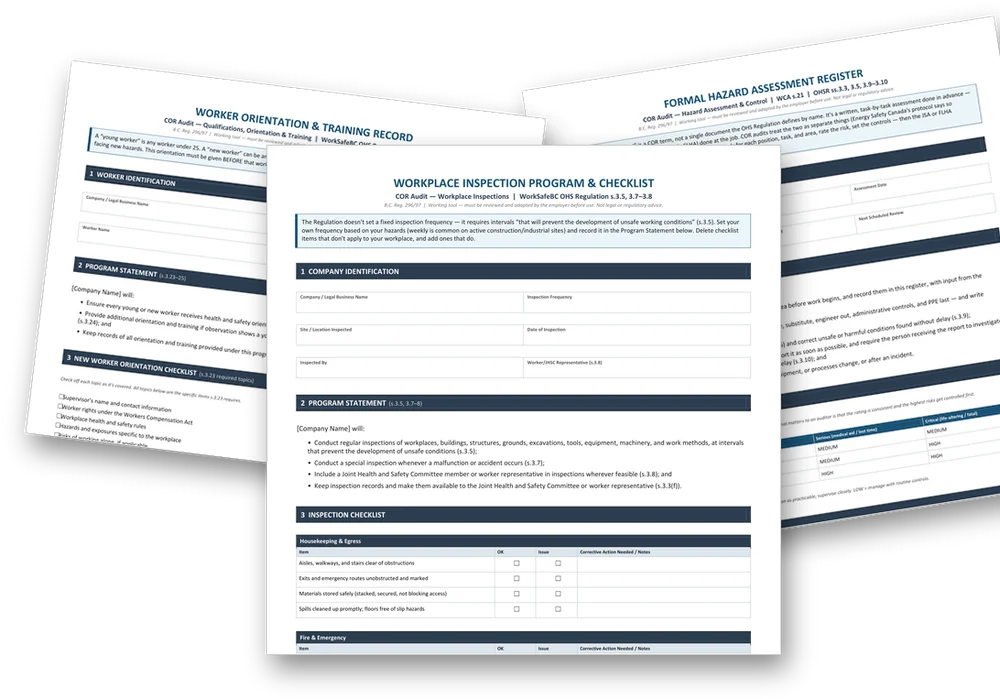
Inside the kit
See the documents before you buy.
The first page of four of the 18 documents, as they ship. Each is a plain Word file with a program statement in everyday language, the regulation sections it is built on, and the forms you fill in. Click any page to enlarge it.
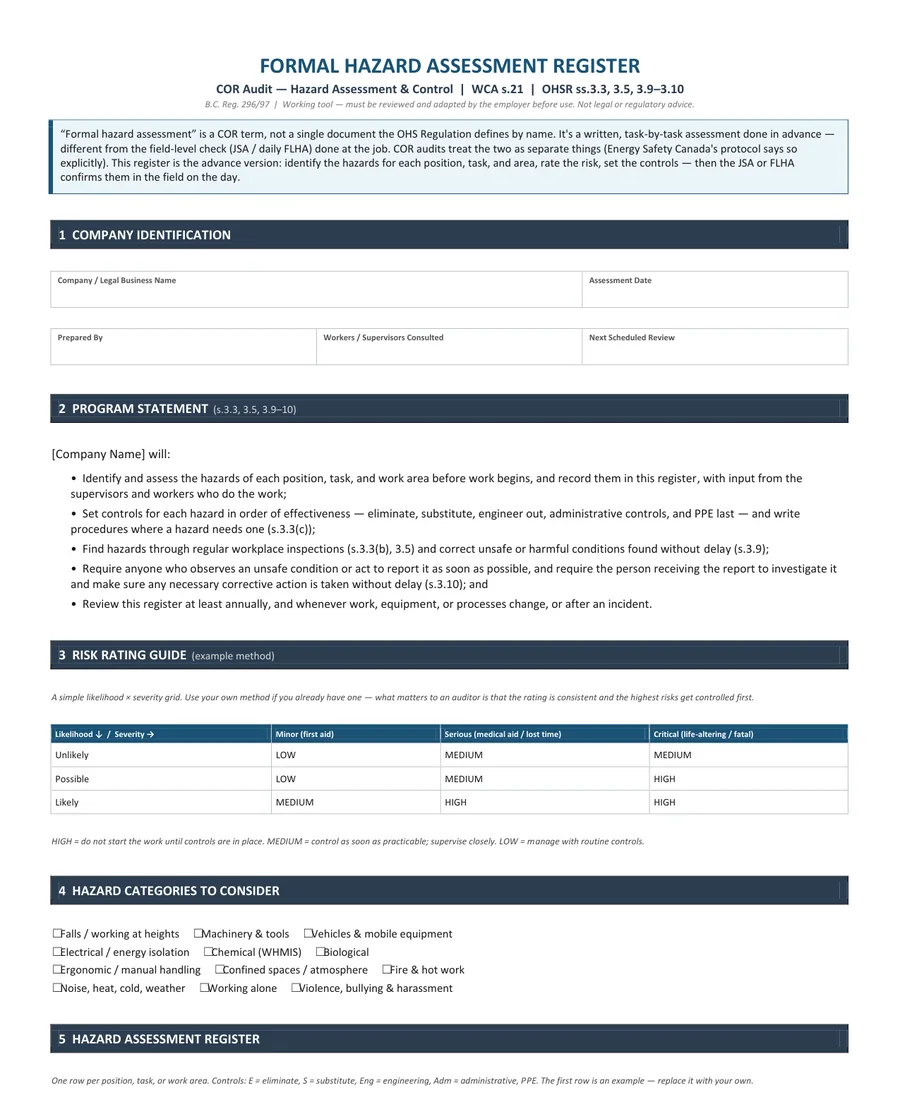
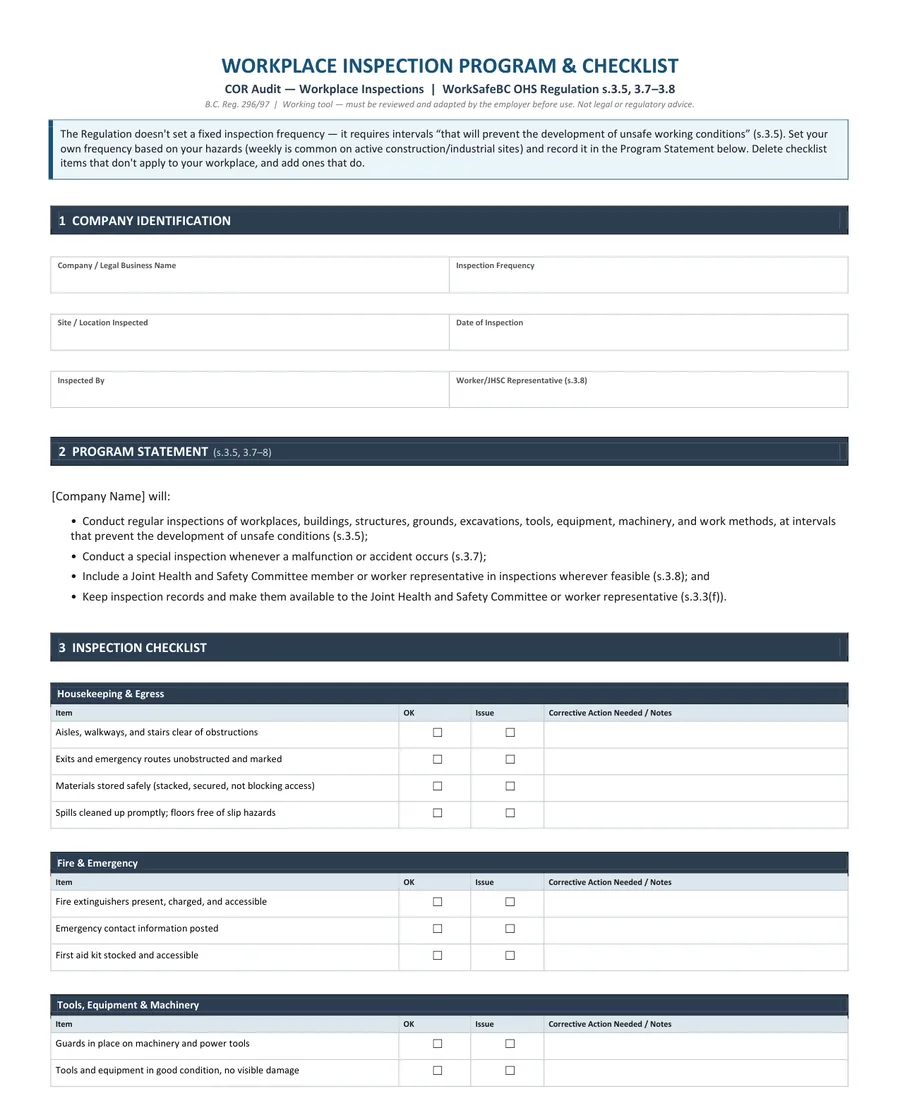
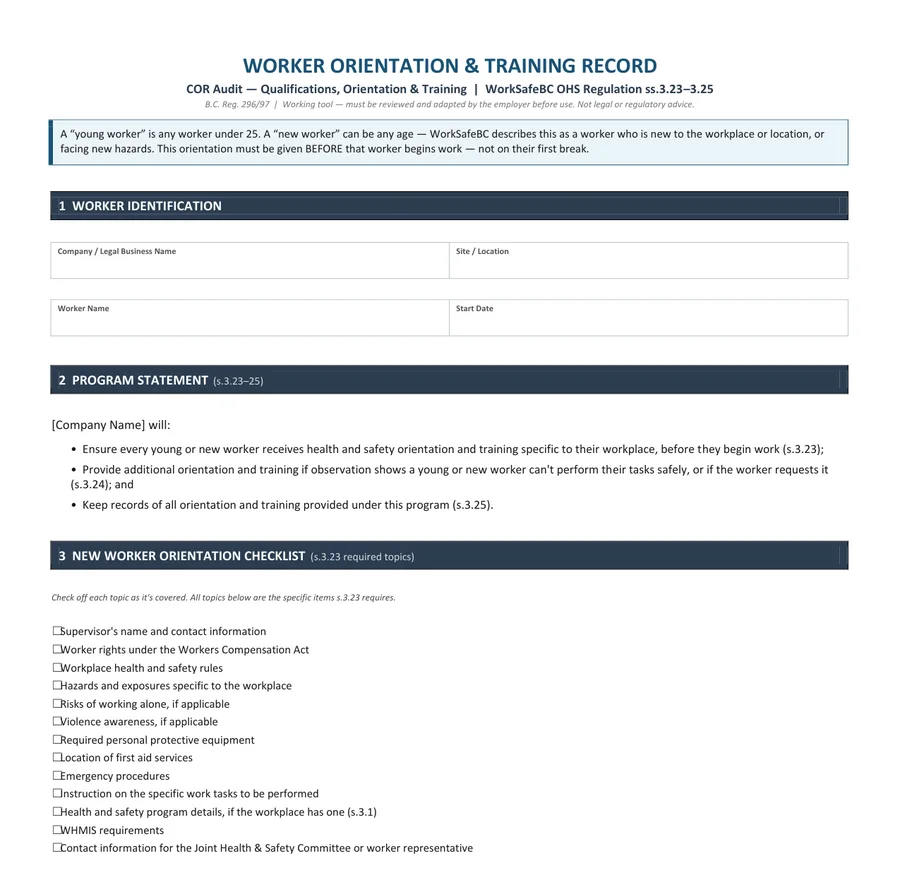
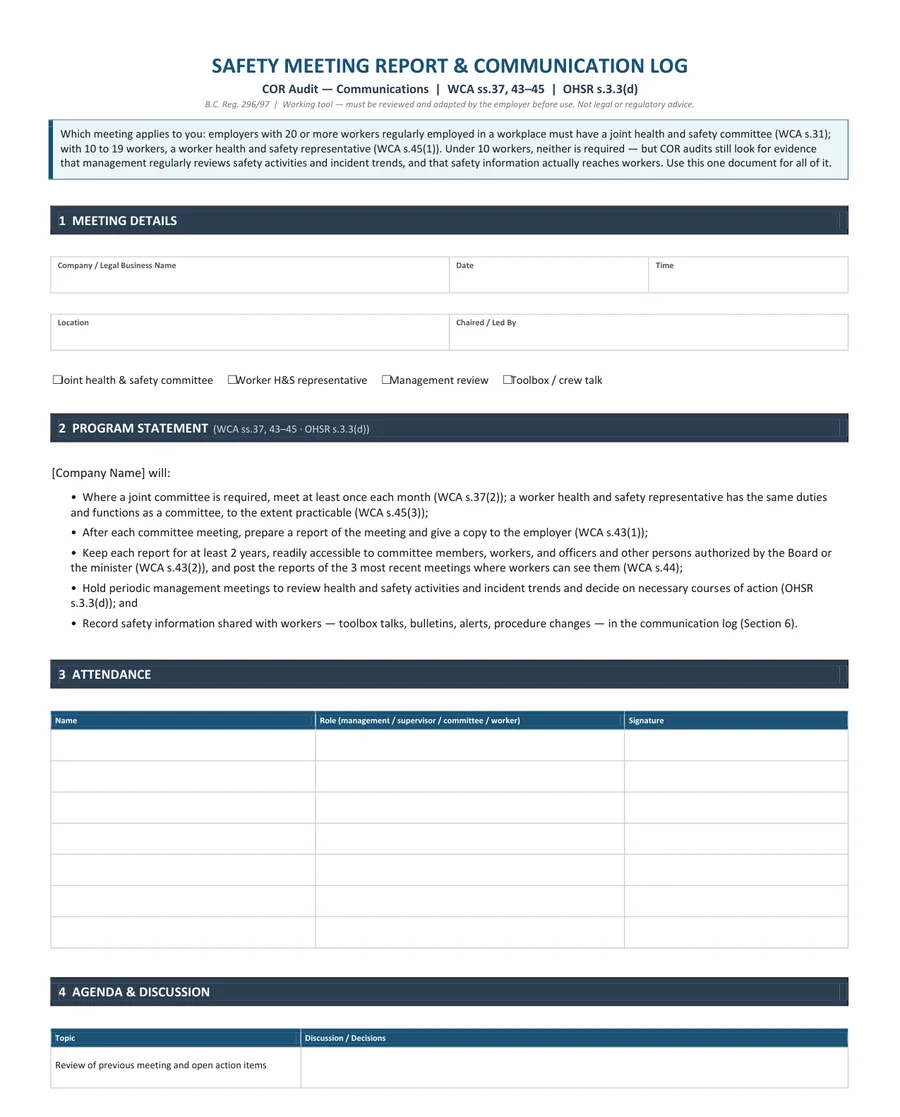
Auditors check documents, interviews and what they see on site, so these only count once they match how your company really works. See all 18 documents and the element-by-element coverage →
Free tools
Know your numbers before you commit.
Two free tools that tell you what COR could be worth and where your safety program stands today.
Free · one minute
COR Incentive Calculator
Enter your payroll and WorkSafeBC base rate to see what the published COR incentive formula could be worth to you each year, with the minimum and per-worker cap applied.
Estimate my incentiveFree · two minutes
COR Gap Check
Thirteen questions across the 13 COR elements. See what you already have in place, what is missing, and which documents (many of them free) close each gap.
Check my readinessIs this for you?
Built for small BC employers.
COR is a voluntary WorkSafeBC program. The kit gives you the written program. It does not certify you: you still pass an audit through your sector's certifying partner.
A good fit
- BC employers with fewer than 20 workers
- Construction and general-industry contractors, where the permits and field templates apply directly
- Owners writing a first safety program who want it cited to the right sections
Check first, or look elsewhere
- Agriculture or tourism: the core documents apply, but your certifying partner has its own audit tool
- Forestry and oil & gas: their audit structures differ and the kit is not designed around them
- 20 or more workers: you need the full audit and more depth than templates provide
How it works
From download to audit-ready.
Download the kit
One purchase, one email with a download link. 18 Word documents plus a bonus audit quick reference for BCCSA, AgSafe, go2HR, BC Forest Safety Council and Energy Safety Canada.
Adapt and use it
Replace the company name and example wording, change anything that doesn't match how you work, then keep the records. Auditors want to see the system running.
Audit with your partner
Book your audit through your certifying partner. WorkSafeBC pays the incentive after you are certified; the calculator above shows what it could be.
Free templates
Field templates are free.
Editable Word documents delivered by email. Several of the kit's documents are available on their own at no cost.
Free templates (email delivery):
Confined Space PermitJSA / FLHAOHS Policy StatementHot Work PermitLockout / TagoutDaily FLHASafe Work ProcedureIncident ReportEmergency Response Plan
Free interactive tool:
BC FireSmart Assessment Tool
Checked against the regulation
We audited our own templates and fixed 7 citation errors.
Every regulatory reference is checked against the live WorkSafeBC OHS Regulation or the Workers Compensation Act. When we find a wrong one, we fix it and say so. See the corrected list → · About Derek →
COR Small-Employer Kit
All 18 documents. One download.
Adapt them to your operation, put them into practice, and take them to your audit.
Get the COR Kit — Instant Access
See everything in the kit first →
Questions? Book a free 15-minute call →
14-day refund, no questions asked: email info@bcsafetydocs.com within 14 days of purchase.
These templates are professional working tools. They must be reviewed by a qualified person prior to use and verified against the current WorkSafeBC OHS Regulation and Workers Compensation Act. Not legal or regulatory advice, and not a guarantee of COR certification or of any WorkSafeBC incentive.